

A child’s developmental journey is not a solitary path. For children navigating sensory processing differences, motor coordination challenges, or developmental delays, progress is rarely achieved through isolated efforts. Instead, a child’s success relies on a cohesive network of support, functioning much like a three-legged stool where the home, the school, and the therapeutic clinic form the vital pillars of growth. When any one of these environments operates in isolation, the child can easily become confused by conflicting expectations or struggle to transfer new skills from one setting to another.
Growing up in North Queensland means children are surrounded by opportunities for vibrant, active, and outdoor-focused lives. Whether they are navigating the sensory play spaces at The Strand, transitioning into local classroom routines, or participating in weekend sports, a child’s motor and sensory skills are constantly engaged with their surroundings. When parents seek to help their child navigate these everyday environments with confidence and a genuine sense of belonging, partnering with a local clinic specialising in paediatric occupational therapy Townsville allows them to establish a consistent, structured framework that extends far beyond clinical walls. This integrated approach ensures that the skills a child develops during a structured session are actively reinforced during their daily routines at home and within the classroom.
The home is where a child’s day begins and ends, making it the primary sanctuary for emotional regulation and habit formation. It is the setting where therapeutic strategies are put to the test in real-time, during ordinary routines like morning dressing, family mealtimes, and bedtime preparation. When parents are actively involved in the therapy process, they learn to view their child’s daily challenges through a developmental lens, understanding the physical or sensory reasons behind a struggle with a button or an emotional meltdown over a food texture.
By adapting the home environment to match the child’s sensory profile, families can create calm spaces that prevent sensory overload before it starts. Simple adjustments, such as establishing visual schedules, setting up quiet zones, or introducing heavy-work activities before homework sessions, can significantly reduce family stress. This collaborative daily practice transforms therapy from a weekly appointment into a natural, quiet extension of the family’s lifestyle.
Collaborative Anchor: The daily home routine is the foundation where therapeutic strategies transition into comfortable, lifelong habits.
For a child, school is their primary workplace. It is a highly complex social and physical environment that demands continuous attention, emotional control, and fine-motor coordination. From holding a pencil and sitting still at a desk to navigating the noisy playground and following multi-step teacher instructions, the school day presents a relentless series of sensory and physical challenges.
When educators work in partnership with a child’s therapist, they can implement minor, high-impact classroom modifications that make learning accessible. This might include using specialised seating cushions, providing sensory breaks, adjusting pencil grips, or breaking down classroom tasks into smaller, visual steps. When teachers understand a child’s specific developmental goals, they can support their progress in a natural peer setting, turning potential classroom frustrations into moments of academic and social success.
Collaborative Anchor: A supportive classroom environment translates clinical progress into real-world social and academic confidence.
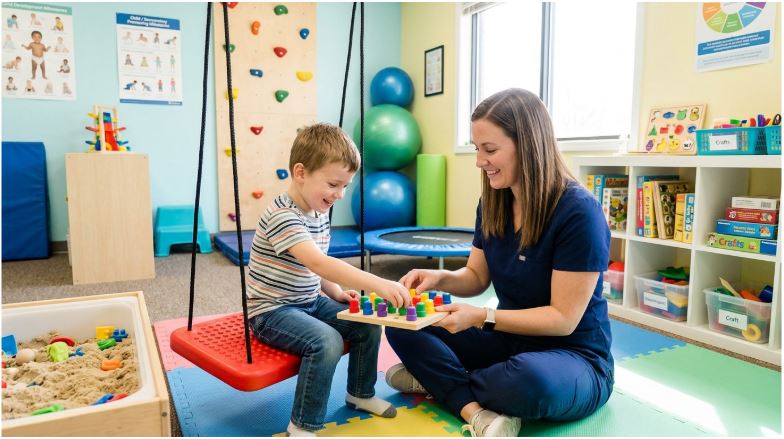
The therapeutic clinic serves as a safe, structured testing ground where a child can develop foundational skills without the social pressure of the classroom or the distractions of home. Under the guidance of an experienced therapist, play is utilised as a powerful developmental tool. Specialised equipment is used to build core strength, improve bilateral coordination, refine fine-motor control, and help children learn to regulate their own nervous systems.
However, the clinical space is not designed to be a permanent bubble. The true value of clinical therapy lies in its ability to equip the child with the tools they need to function confidently in their broader world. By acting as a central communication hub, the clinical team can share progress, refine goals, and provide practical coaching to both parents and teachers. This ongoing dialogue ensures that everyone in the child’s life is working toward the same developmental milestones with absolute consistency.
Collaborative Anchor: The therapy clinic acts as a nurturing space for developing strategies that empower the child across all areas of life.
When the home, school, and clinical environments align, the positive impact on a child’s self-esteem and independence is profound. By sharing insights, using consistent language, and reinforcing the same coping strategies, we create a secure, predictable world where children feel understood and supported. This collaborative unity allows children to overcome developmental barriers, discover their personal strengths, and step into their daily routines with genuine confidence.